InsForge Review 2026: Agent-Native Cloud Infrastructure, CLI Updates, Self-Hosting, and AI Backend Features
InsForge is building an agent-native cloud infrastructure platform for developers and AI coding agents. Instead of stitching together separate tools for database, auth, storage, AI models, realtime, functions,.

InsForge is building an agent-native cloud infrastructure platform for developers and AI coding agents. Instead of stitching together separate tools for database, auth, storage, AI models, realtime, functions, analytics, and deployment, InsForge aims to give agents one production-ready backend stack they can operate end to end.
The latest InsForge changelog shows a platform moving quickly: new CLI Advisor commands, organization management, self-hosted backups, AI usage overview, PostHog analytics for self-hosted projects, Apify web scraping, S3-compatible storage, and passwordless email OTP login.
What Is InsForge?
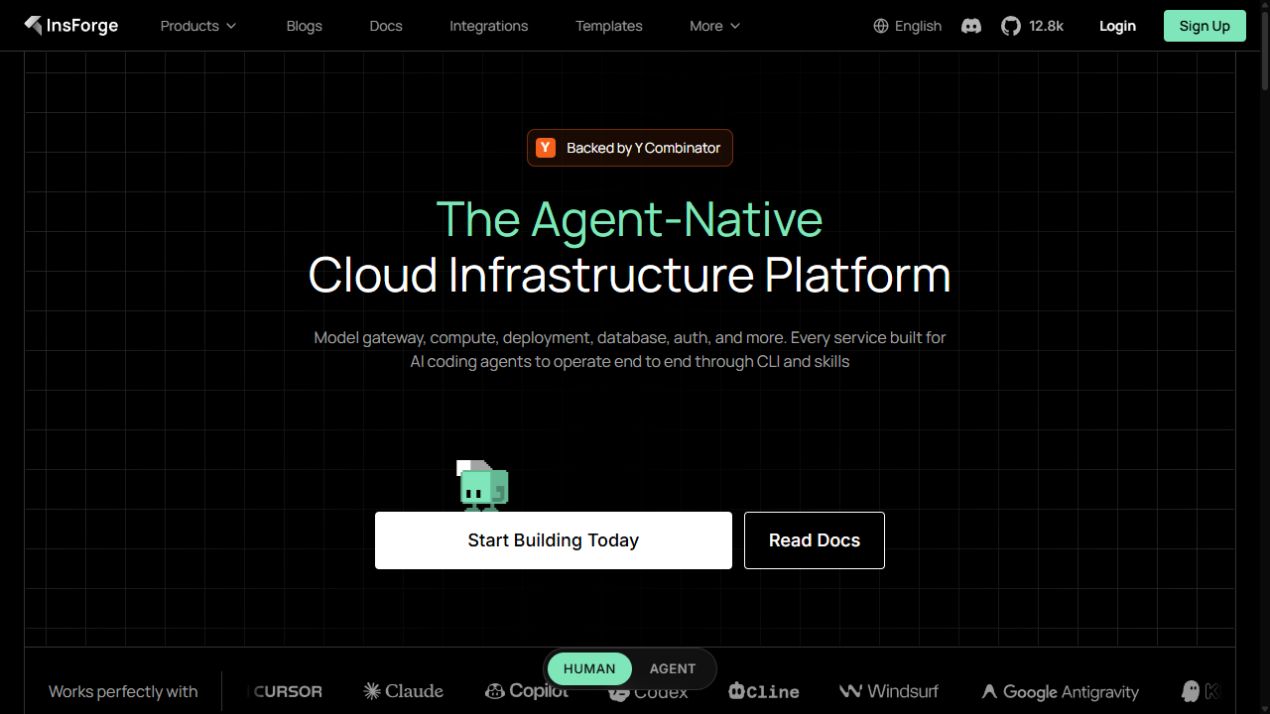
InsForge is a backend and cloud infrastructure platform for production apps built with AI coding agents. Its homepage describes the core stack as model gateway, compute, deployment, database, authentication, and more, with services built for agents to operate through CLI workflows and skills.
The platform is especially relevant for builders using tools such as Codex, Cursor, Claude Code, Windsurf, Cline, Copilot, and other coding agents. The promise is simple: give the agent the infrastructure layer it needs so it can build, configure, test, and deploy real applications faster.
1. Production Services in One Agent-Friendly Stack
InsForge includes the pieces many AI-built apps need from day one: authentication, Postgres database, cloud storage, edge functions, model gateway, realtime updates, sites hosting, cron jobs, custom compute, vector search, analytics, payments, and messaging. That breadth makes it closer to a complete backend operating layer than a single-purpose developer tool.
For solo builders and small teams, this can reduce the friction of wiring together separate auth, database, file storage, AI model routing, and hosting services before the app is even usable.
2. New CLI v0.2.5 Commands for Advisor, Organizations, Backups, and AI
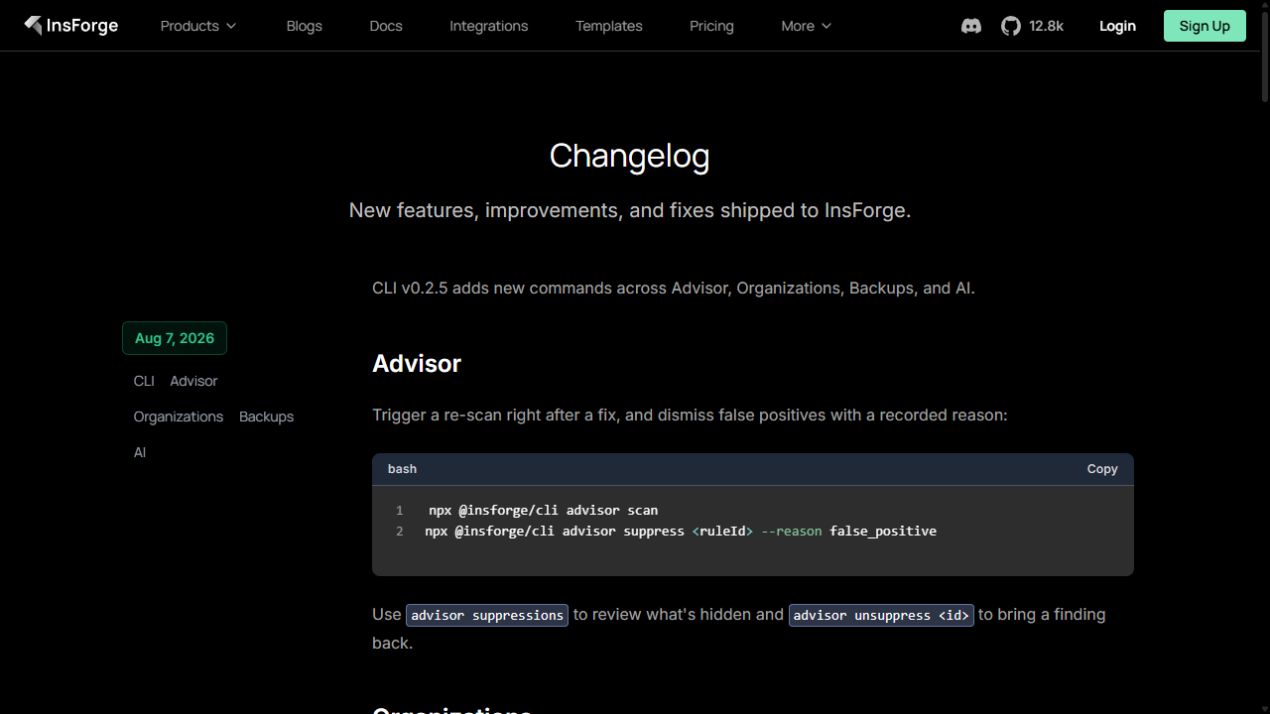
The August 7, 2026 changelog introduces CLI v0.2.5 updates. Advisor can now re-scan after a fix and suppress false positives with a recorded reason. That matters because coding agents often make a change, run checks, and need to verify whether the issue is resolved without leaving the terminal flow.
The same release adds organization leave and delete commands, self-hosted backup support across backup subcommands, and an AI overview command for usage, limits, remaining credit, and per-model spend. Together, these updates make the CLI more useful for both day-to-day agent work and operational maintenance.
3. Self-Hosted Analytics With PostHog
The August 2, 2026 update brings analytics into self-hosted deployments through Bring Your Own PostHog. Self-hosted users can connect a PostHog project, choose a region, and use the analytics page for KPIs, breakdowns, retention, and session replays. The platform validates the key before storing it encrypted on the user’s own backend.
4. Self-Hosted Web Scraper With Apify
InsForge also extended its Web Scraper to self-hosted projects through Apify. Users can connect their own Apify account, validate the token, and access Actors, Runs, and Dataset tabs from the InsForge dashboard. Cloud projects keep the one-click OAuth connection, while self-hosted teams get a bring-your-own-account path.
5. S3-Compatible Storage for Self-Hosted Projects
The July 27, 2026 changelog adds S3-compatible storage for self-hosted InsForge. Supported options include AWS S3, Cloudflare R2, Wasabi, Tencent COS, Aliyun OSS, MinIO, RustFS, Garage, and Ceph. The update also includes Docker Compose overlays for MinIO and RustFS, plus a proxy mode for private storage endpoints and providers without S3 POST policy support.
6. Passwordless Email OTP Login
The same July update adds passwordless login with six-digit email OTPs. Apps can request a code, then create a session with email, code, and method set to OTP. Codes expire after five minutes, work once, and are consumed after failed attempts, helping reduce account discovery and abuse risk.
7. Coding Agent Setup With User API Keys
The July 17, 2026 changelog highlights a floating “Connect your coding agent” dock on organization project pages. It generates a setup prompt with a user API key so a coding agent can authenticate and connect the current project from the working directory. This is very aligned with InsForge’s agent-native direction.
Who Should Try InsForge?
- Developers building with AI coding agents
- Solo founders who want production backend services without stitching together many vendors
- Teams comparing Supabase, Firebase, hosted Postgres, and AI-native backend platforms
- Builders who need auth, database, storage, AI models, realtime, functions, hosting, and analytics in one stack
- Self-hosted teams that want more control over storage, analytics, scraping, and backups
InsForge Pros and Things to Consider
Best parts: InsForge is designed around how AI coding agents actually work. The platform combines production services, CLI control, self-hosting options, model gateway, database, auth, storage, realtime, functions, analytics, payments, messaging, and deployment workflows.
Keep in mind: Infrastructure still deserves careful review. Before production use, teams should test permissions, backups, storage configuration, API keys, analytics settings, payment flows, and security-sensitive authentication behavior.
Final Verdict
InsForge is one of the more interesting infrastructure platforms for the AI coding-agent era. Its latest changelog shows fast movement toward agent-operated backend workflows, stronger self-hosted support, and a more complete production stack for apps built with AI.
SEO keywords: InsForge review 2026, InsForge changelog, agent-native cloud infrastructure, AI coding agent backend, InsForge CLI, InsForge self-hosting, PostHog analytics, Apify web scraper, S3 storage, email OTP login, Supabase alternative, Firebase alternative, AI backend platform.