Omi App Store: 594 Apps, 9 That Anyone Uses (2026 Breakdown)
Omi's pitch for its app store is a number. "Thousands of apps," the marketing says. The store page itself says "596+." When we counted the category totals on.
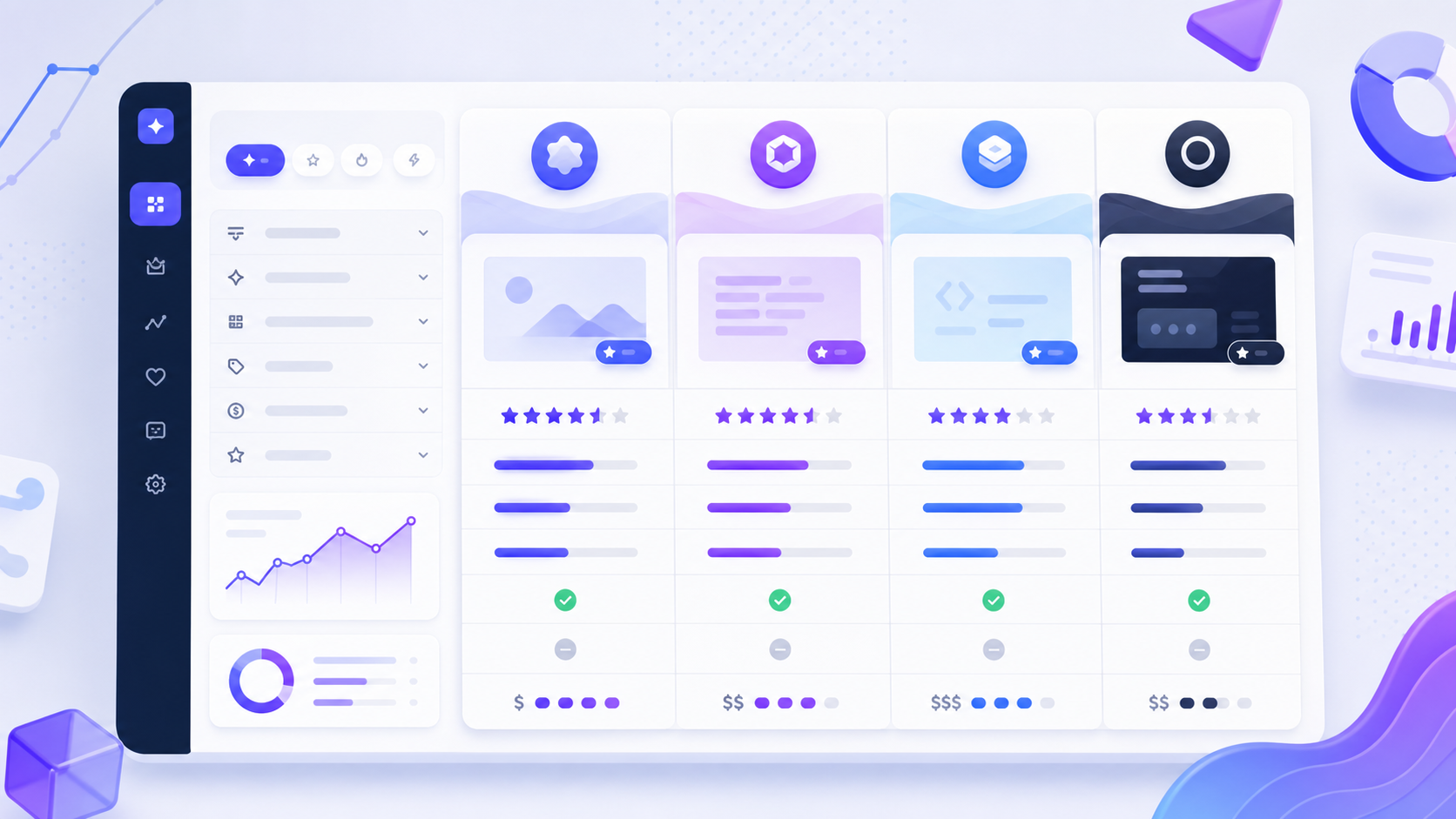
Omi’s pitch for its app store is a number. “Thousands of apps,” the marketing says. The store page itself says “596+.” When we counted the category totals on the live page on 31 October 2026, they added up to 594.
That gap is small and forgivable. The more interesting number is the one nobody puts on a landing page: how many of those 594 apps anyone actually uses.
We went through the Omi App Store and the developer docs category by category. Here is what the ecosystem looks like when you read the install counts instead of the headline.
What is actually in the Omi app store
Apps are grouped into 17 categories. These were the counts shown on the store page when we checked:
| Category | Apps |
|---|---|
| Conversation Insights | 158 |
| Productivity | 103 |
| Utilities & Tools | 51 |
| Learning & Education | 42 |
| General | 39 |
| Emotional Support | 36 |
| Health & Fitness | 35 |
| Communication | 33 |
| Entertainment & Games | 29 |
| Social & Relationships | 20 |
| Persona & AI Chat | 16 |
| Finance | 12 |
| Travel | 8 |
| Security & Safety | 6 |
| News & Info | 4 |
| Shopping | 2 |
| Integration Apps | no count shown |
Two categories — Conversation Insights and Productivity — hold almost half of everything in the store. The long tail is genuinely long: Shopping has two apps in it.
The install counts tell a different story than the app count
Here is the “Most Popular” list as the store ranked it, with the rating and install count each app carries:
| # | App | Rating | Installs |
|---|---|---|---|
| 1 | Google Drive (Omi Team) | 3.3 | 45.9K |
| 2 | Audio Backup | 2.8 | 8.0K |
| 3 | ChatGPT | 2.6 | 5.9K |
| 4 | General Summary (Omi Team) | 3.9 | 5.7K |
| 5 | OpenClaw | 4.5 | 3.4K |
| 6 | Conversation Summarizer | 4.0 | 2.8K |
| 7 | Omi Assist | 4.0 | 2.2K |
| 8 | ADHD Assistant | 5.0 | 2.0K |
| 9 | Insight Extractor | 3.8 | 1.9K |
Three things jump out.
The drop-off is a cliff, not a slope. The top app has 45,900 installs. The second has 8,000 — a sixth as many. By ninth place you are at 1,900. Outside the top nine, counts fall into the hundreds fast: Bitcoin Live sits at 905, Notion at 889, Daily at 822. Across 594 apps, the overwhelming majority are in triple digits or lower.
The most-installed apps have the worst ratings. Google Drive — the single most popular app, built by the Omi team — holds a 3.3. Audio Backup is a 2.8. ChatGPT, the third most installed, is a 2.6. Notion is a 2.7. Meanwhile ADHD Assistant has a perfect 5.0 across 2,000 installs and Speech Coach a 5.0 across 1,000. The pattern reads like infrastructure apps that people install because they need the integration and then rate poorly because it is fiddly, versus small prompt apps that do one thing and do it cleanly.
The integrations people reach for first are storage and chat. Four of the top five are “get my data somewhere else” apps: Google Drive, Audio Backup (also Google Drive), ChatGPT, OpenClaw. That is a strong signal about what buyers actually want from a conversation recorder: a pipe into the tools they already use.
The persona apps are the store’s best shop window
Persona & AI Chat is one of the smallest categories at 16 apps, but it is the one that demos well. Steve Jobs (5.0, 913 installs), Marcus Aurelius (5.0, 646), Albert Einstein (4.3, 471), Machiavelli (5.0, 415), Sam Altman (4.3, 252), Paul Graham (3.8, 434). You wear the pendant, it hears your day, and a chat persona reacts to it in a voice you picked.
These are prompt-based apps, which is why there are so many of them and why they are easy to make. Per Omi’s docs, a prompt-based app needs no server at all — you write the prompt, you are done. That is the entire build.
What we would be cautious about
Browsing the store turns up categories that deserve a second look before you install.
Clinical-sounding apps built by individuals. Health & Fitness and Conversation Insights contain “Doctor Patient Notes” (3.6, 391 installs) and “Therapist Patient Notes” (3.9, 647), both third-party submissions generating structured clinical notes from recorded conversations. Omi’s review process checks functionality, guidelines, security, endpoint health and description accuracy — it does not claim any clinical or regulatory review, and nothing in the docs suggests one. If you are a practitioner, that is a conversation to have with your own compliance people, not something to decide from an app listing.
Novelty analysis dressed as measurement. “Lie Detector Pro” (4.2, 1,800 installs) claims to score each speaker’s “likelihood of deception” from hesitations, vague answers and tone. There is no established basis for inferring deception from these cues in ordinary conversation. Treat it as a toy; do not treat its percentages as findings about a real person.
Mental-health framing. Emotional Support has 36 apps and Health & Fitness advertises mental-health monitoring. They may be pleasant to use. They are not care, and no app listing in a consumer store should be read as a substitute for talking to someone qualified.
None of this is unique to Omi — every open app marketplace carries it. It is worth saying out loud because the store surfaces all of it with the same clean cards and star ratings.
For developers: what building on Omi actually involves
The platform side is more substantial than the app counts suggest. From Omi’s own documentation:
- Prompt-based apps — chat personas and memory processors. No server required.
- Integration apps — webhooks that fire on memory creation, on live transcript, on raw audio, or on daily summaries.
- Chat tools — custom tools the user can invoke inside Omi chat (“create a GitHub issue”).
- Notifications — direct text or AI-generated proactive pushes to users.
- OAuth 2.0 for accessing user data with consent, plus data-import APIs for writing conversations and memories into a user’s account.
- Official SDKs in Python, Swift and React Native, an MCP server for pointing an AI coding agent at your own Omi data, and a documented BLE protocol.
- Real-time audio streaming and a custom speech-to-text WebSocket protocol, if you want to replace transcription entirely.
Publishing is free, done from inside the mobile app, and reviewed by the team. Integration apps must serve over HTTPS, respond in under five seconds and be available 24/7.
Two things the developer pitch leaves out
“Start earning” is not documented anywhere. The app store page invites developers to “create powerful AI-powered apps for Omi and start earning.” We read the publishing docs, the app-building docs and the full documentation index. There is no revenue share, no paid-app mechanism, no payout process described. The only paid route we found is Bounties — team-posted tasks with a public spec, awarded to the first PR that meets it. That is a real way to get paid by Omi; it is not the same thing as earning from an app you publish.
Open source does not mean self-hostable. Everything — mobile apps, backend, desktop, firmware, hardware files, the plugins platform — is in the BasedHardware/omi repo under the MIT License, and contributors do run the backend locally for development. But Omi’s own docs state plainly: “Running your own production copy of Omi is not supported or documented.” If your reason for buying an open-source wearable is that you intend to run the whole stack yourself, read that sentence twice. What Omi offers instead is bring-your-own-key, on-device or self-hosted transcription, and export/deletion from the app.
One more inconsistency worth knowing
The footer of the app store page still advertises the pendant at $89. The product page sells it at $169 (down from $229). We flagged a version of this in our Omi pendant review and it is still there. It is almost certainly a stale template rather than a hidden deal — but if you see $89 anywhere on Omi’s site, it is not a price you can check out at.
Verdict
The app store is a real ecosystem with a thin top layer. Nine apps carry most of the installs, four of them are plumbing to Google Drive and ChatGPT, and the headline app count is padded by hundreds of prompt apps with double-digit adoption. That is not damning — it is what every young marketplace looks like — but it means you should buy Omi for the hardware and the core capture loop, not because “596 apps” implies an app for your exact use case.
For developers, the platform is unusually open and unusually cheap to enter: a persona app is a prompt and nothing else, and publishing costs nothing. Just go in knowing that the earning part is, as of now, undocumented.
Check current Omi pricing and availability →
FAQ
How many apps does the Omi app store have?
Omi advertises “596+.” Adding up the per-category counts shown on the live store page on 31 October 2026 gave 594 across 17 categories, with Integration Apps showing no count. Elsewhere Omi’s marketing says “thousands,” which the store page does not support.
Do Omi apps cost money?
The apps we checked are free to install. Omi’s documentation describes no paid-app or revenue-share mechanism for developers.
Can I build an Omi app without a server?
Yes. Prompt-based apps — custom chat personas and memory processors — require no server. Integration apps need an HTTPS endpoint that responds within five seconds and is available 24/7.
Is Omi really open source?
Yes, under the MIT License, including backend, firmware and hardware files. But Omi’s docs state that running your own production copy is not supported or documented. Bring-your-own-key and custom transcription are the supported routes to data control.
What is the most popular Omi app?
Google Drive, built by the Omi team, with 45,900 installs and a 3.3 rating — roughly six times the installs of the next app on the list.
All figures read directly from omi.me and docs.omi.me on 31 October 2026. App counts, ratings and install numbers on a live marketplace change; check the store before relying on any single figure.